First-gen Chromecasts are vanishing from streaming apps. Google won't say if it's a fix or a quiet EOL.
YouTube, HBO Max, and others stopped listing the 2013 Chromecast as a cast target. Google EOL'd the hardware in 2023 and isn't commenting.
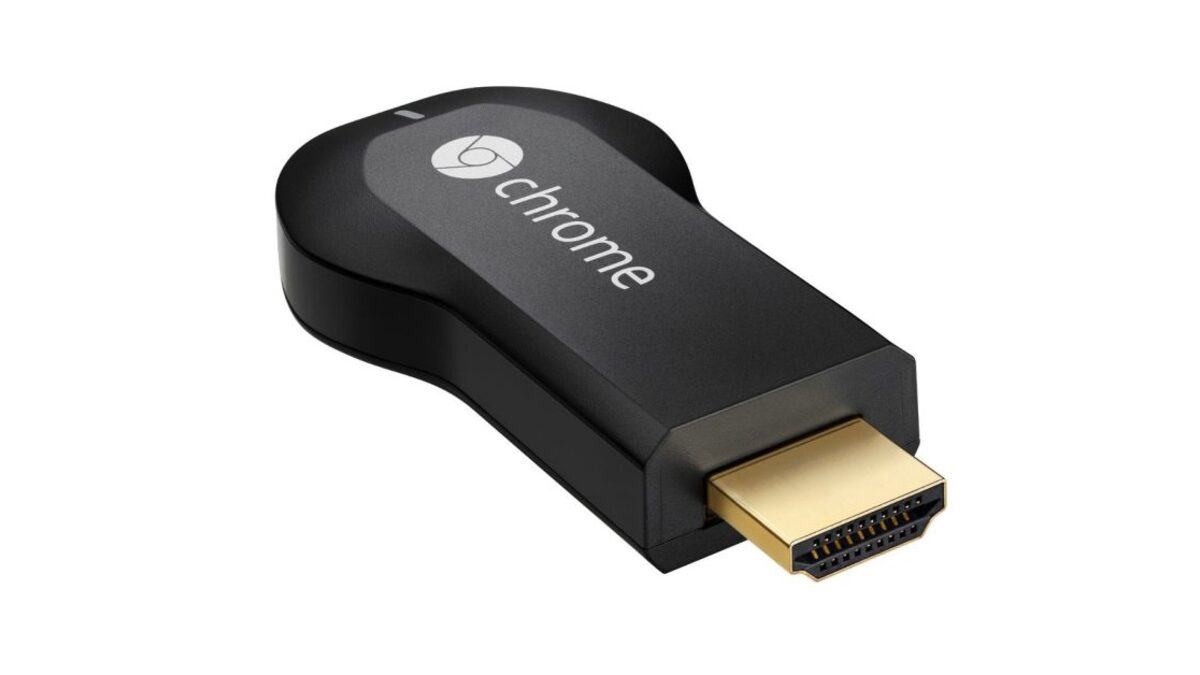
The first-generation Chromecast came out in July 2013 for $35. It is a stubby HDMI stick. It is now quietly disappearing from the cast-target picker in YouTube, HBO Max, and a handful of other streaming apps. Some owners still see the device. Many don’t. Google has said nothing.
9to5Google reported yesterday that scattered failures have been piling up for “a few weeks,” with a sharp uptick in the last few days. The pattern is inconsistent. Disney+ and Spotify still find the device. YouTube and HBO Max have started omitting it from the cast list, apparently per-app rather than per-account. Some users see it on one phone but not another.
This is not the same bug as 2025
Last March, the second-generation Chromecast (2015) and Chromecast Audio went completely dark on the same day with a “Untrusted device: couldn’t be verified” error. That outage had a known cause, documented in detail by DigiCert: the intermediate device-authentication certificate burned into the 2015 hardware had a 10-year validity window, and it expired on March 9, 2025. Google shipped a firmware update within days, rotated the affected devices onto a new internal CA valid through 2045, and the second-gen lineup came back online.
The first-gen Chromecast uses a different certificate with a 20-year validity, per Gadget Hacks’s review of the cert chain. That cert is good through roughly 2033. So whatever is breaking now isn’t a hardware-side cryptographic expiry.
What’s left as the likely cause is the server-side cast registry or the streaming apps themselves. Google maintains a backend service that handles cast discovery and authentication. Each streaming app calls into the Cast SDK to decide whether a discovered device meets the app’s current requirements. If Google has quietly raised the minimum protocol version, or if the apps are independently dropping support for a 13-year-old SDK target, the symptoms would look exactly like what owners are seeing: inconsistent, per-app, no error message, no rollout schedule.
What Google has and hasn’t said
Updates for the first-gen Chromecast stopped in 2023. Google’s official EOL notice from that year warned users they “may notice a degradation in performance” but did not commit to a shutdown date. Three years on, the practical interpretation of “may notice” is becoming clearer: the device still casts, sometimes, until the day it doesn’t.
A request for comment to Google through the 9to5 piece got no reply. The most likely answer, if one comes, will reference the 2023 EOL notice rather than acknowledge a specific server-side change. The fact that Disney+ and Spotify still work suggests Google hasn’t shut off the device wholesale at the discovery layer. The fact that YouTube, Google’s own app, has dropped it as a target is the part that makes a server-side cull look unlikely. If Google were trying to deprecate the hardware, YouTube would be the last app to keep working, not the first to drop it.
What’s still unclear
Whether Google fixes this is the open question. The Chromecast Ultra (2016), the original Google Home, and the Home Mini all sit on certificates with expiry windows in 2026 and 2027, per Gadget Hacks. If Google rotates those without rotating the first-gen, it’s a soft signal that the 2013 device is past the line. If a quiet firmware push lands and the first-gen pops back into YouTube’s picker, then this is what it looked like in March 2025: a Cast SDK migration that briefly stranded an older device class.
For now, the device works for some apps and not others, the manufacturer is not commenting, and the workaround floating in the Reddit threads (factory reset, reauthenticate via the Google Home app, try Disney+) does not consistently restore YouTube as a target.
What this means for you
If you still have a first-gen Chromecast plugged into a guest-room TV, don’t factory-reset it. Google’s own community guidance on the 2025 second-gen outage specifically warns that a reset can make the situation worse, because the device then needs to reauthenticate against the same backend that may already be refusing it. The safest move is to leave the device alone, switch the affected apps to a newer cast target (a Chromecast with Google TV, a Roku, a smart TV with built-in casting), and wait two weeks. If Google ships a fix, you can come back.
If you maintain a fleet of older devices, this is a small reminder that “hardware EOL” rarely means “dies tomorrow.” It means “stops being maintained, starts drifting out of compatibility with the apps that used to talk to it.” Plan replacements on the soft-failure curve, not the official notice. A $30 streaming stick is cheaper than the family argument about why the bedroom TV stopped casting.
For Google specifically, the unanswered question is whether a 13-year service window for a $35 device is more or less than buyers reasonably expected. The Pixel hardware line just extended to seven years of updates. Chromecast got ten before the rot started. That gap, more than this week’s outage, is the part worth watching.
Share this article
Sources
- First-gen Chromecast streamers are suddenly failing for some users, 13 years later — 9to5Google
- Addressing the Chromecast Certificate Expiration — DigiCert
- Google says it's rolling out fix for stricken Chromecast kit — The Register
- First-Gen Chromecast Not Working in 2026: Why a Fix Is Unlikely — Gadget Hacks