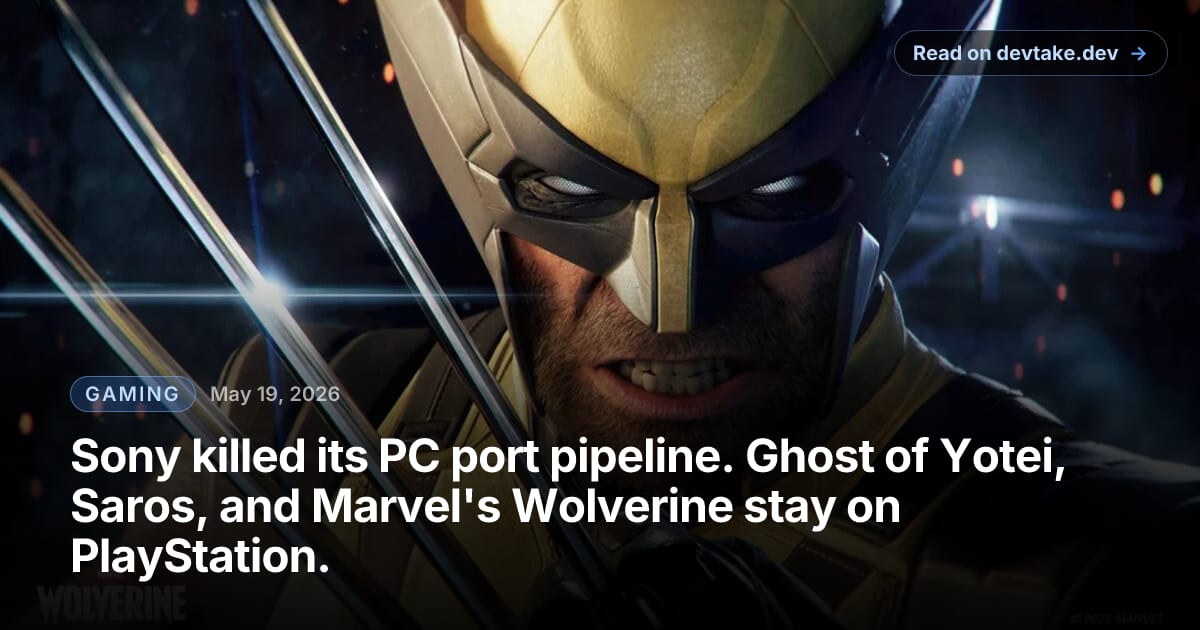
Sony killed its PC port pipeline. Ghost of Yotei, Saros, and Marvel's Wolverine stay on PlayStation.
PlayStation Studios CEO Hermen Hulst told staff on May 18 that single-player first-party games will stay console-exclusive. Multiplayer titles keep multi-platform.
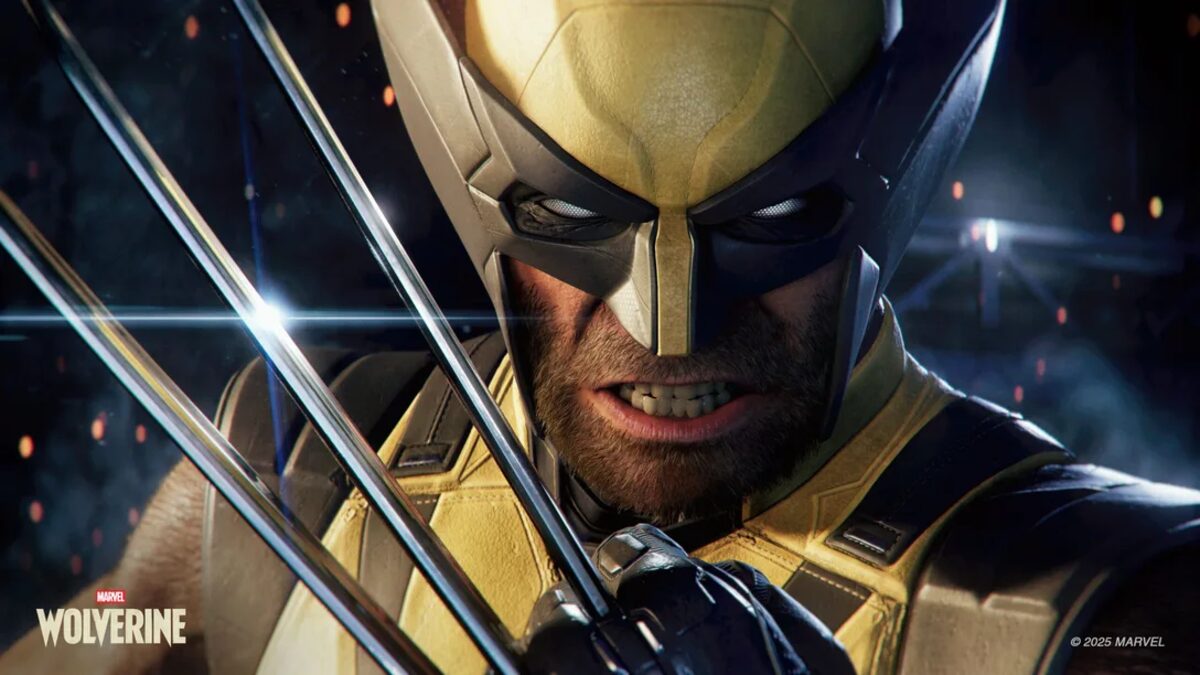
PlayStation Studios CEO Hermen Hulst told staff at a Monday town hall on May 18 that the company’s narrative single-player games will now stay on PlayStation. The first three titles affected are Ghost of Yotei (Sucker Punch), Saros (Housemarque), and Marvel’s Wolverine (Insomniac). Bloomberg’s Jason Schreier broke the story: “the company’s narrative single-player games will now be PlayStation exclusive,” he wrote on Bluesky, “confirming Bloomberg’s reporting from earlier this year.” Video Games Chronicle and Game Informer confirmed the slate.
The reversal lands four years after Sony spent the back half of the previous console cycle porting first-party hits to Steam. God of War, Horizon Forbidden West, Spider-Man Remastered, and The Last of Us Part I all eventually hit PC. That cadence is over for the single-player slate, and it’s the first big policy decision PlayStation has surfaced under the new console-first thesis.
What changed today
The internal pivot Hulst described was the slate, not the policy. Sony’s leadership reportedly concluded that the existing pattern, where a first-party game ships on PS5 and lands on PC a year or two later, risks damaging the console’s brand and pulling future PlayStation hardware sales forward. The argument inside Sony is that the kind of buyer who is willing to wait 18 months for a PC release was not going to buy a PS5 in the first place, so the lost margin on console sales is bigger than the upside from Steam revenue.
A faction at PlayStation has argued this point for two years. The original Bloomberg report from March flagged it as an active internal debate; the same Bloomberg sourcing said insiders feared PC releases “risk damaging the console’s brand and will hurt sales of the PlayStation 5 and its successors.” Today’s town hall makes it the policy.
What stays on PC:
- Multiplayer titles. Marathon (Bungie) and Helldivers 2 (Arrowhead) keep their multi-platform release plans. Sony’s logic: live-service games depend on player population, and you cannot ration a player base that needs every platform to fill its lobbies.
- Older catalog titles. Nothing in Hulst’s remarks suggests Sony will pull Spider-Man or Horizon Forbidden West off Steam. The change is forward-looking.
What gets pulled:
- Ghost of Yotei. Sucker Punch’s follow-up to Ghost of Tsushima had a PC port on the internal roadmap. That roadmap entry is gone.
- Saros. Housemarque’s next big single-player release.
- Marvel’s Wolverine. Insomniac’s previously assumed multi-platform release plan is now PlayStation-only.
What we don’t know
A few load-bearing details Hulst did not nail down at the May 18 town hall.
- Effective date. Hulst didn’t commit to a calendar for when the policy starts and ends. The three titles named, Ghost of Yotei, Saros, and Marvel’s Wolverine, are PS5 generation projects in active development. Whether anything past the PS5 successor inherits this rule is open.
- Revenue assumption. Sony has never disclosed the PC port revenue split for any first-party game. Public estimates put the God of War PC port at well above $200 million in lifetime gross. Whether the new policy assumes Sony can keep more than that in PS5 hardware margin is the math nobody can audit from outside.
- Direct Hulst quote. Schreier’s Bluesky post is the only public version of the town hall, and it paraphrases. No transcript has leaked.
- The Bungie carve-out. Marathon stays multi-platform because it is multiplayer, per the framing. Bungie’s next single-player project, if there is one, is not addressed.
What this means for you
If you play PlayStation exclusives on PC, the catalog you have is the catalog you have. Buy the older titles before Sony’s tone shifts on those too; on the new slate, plan around the PS5 itself. The PS5 Pro is the entry the policy is designed to protect, and Sony’s hardware pricing is now built on the assumption that the single-player flagships will not show up on Steam at half-price two years later. The frustration is real, but the strategic logic is the cleanest read on Sony’s behavior in a decade. Microsoft is doing the opposite, shipping flagship Xbox titles to PlayStation and Switch 2; the two companies are taking opposite bets on what platform exclusivity is worth. The PC ports of the next ten Sony hits depend on which bet works.
Share this article