Taiwan weighs making AI chip exports to all of China a crime, not just to Huawei
Taiwan is considering US-aligned export controls that would treat unauthorized AI chip shipments to any Chinese customer as a crime. It's under discussion, not law yet.
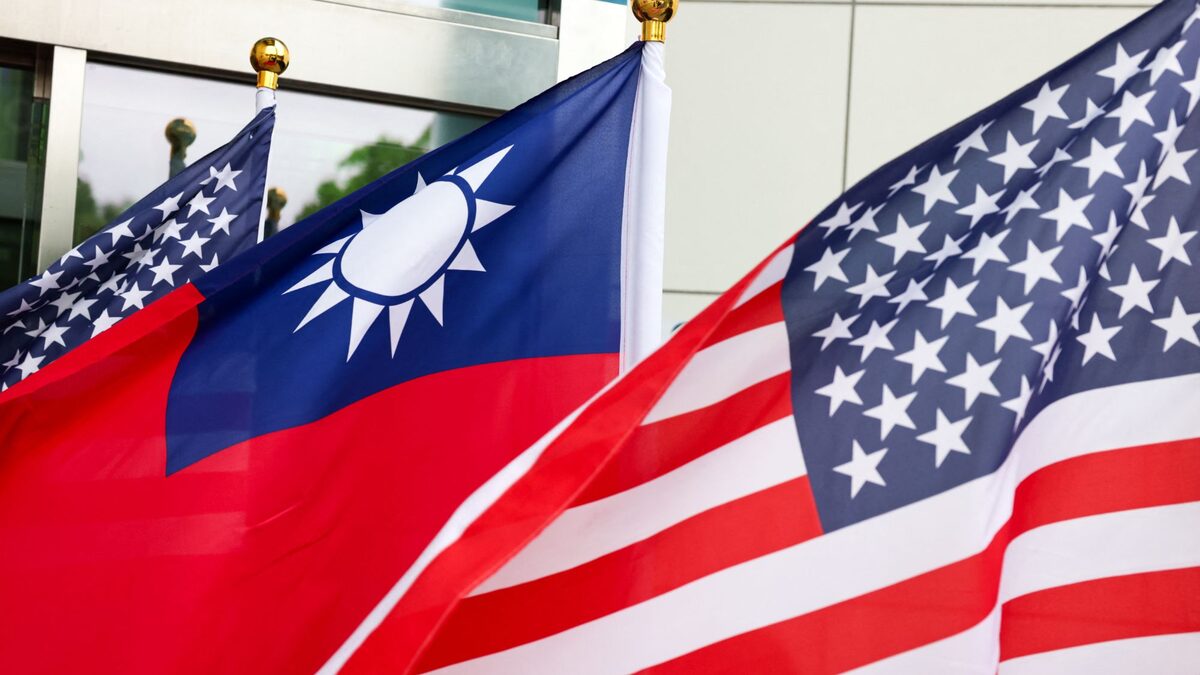
Taiwan is weighing whether to make AI chip exports to all of China a crime. Right now they aren’t, and that gap is the whole story. Taipei is discussing controls that would cover every Chinese customer, not just blacklisted firms like Huawei, and let prosecutors charge smuggling for the first time, Bloomberg reported on June 9.
Read that carefully, because the framing matters: this is under discussion, not law. No rule has been signed, no threshold finalized, no timeline set. But the direction is a real shift. Taiwan sits at the center of the global AI supply chain, TSMC fabs the chips and Taiwanese contractors assemble most of the world’s AI servers, so a change in what Taipei calls legal ripples straight through to every company trying to build with Nvidia hardware. The proposal would align Taiwan’s controls with Washington’s, which is exactly what the US has been pushing for.
What’s on the table
The core change is scope. Today Taiwan requires an export license only for shipments to companies it has specifically blacklisted, and it added Huawei and SMIC to its entity list in June 2025. That’s a named-company approach: if you’re not on the list, the AI hardware can flow. The measure under discussion would flip that to a market-wide rule covering all Chinese customers, according to Tom’s Hardware.
The second change is teeth. Taiwan doesn’t currently treat unauthorized AI chip exports to China as a crime. Prosecutors who’ve gone after suspected smugglers have had to reach for charges like document falsification, the Taipei Times reported, because there’s no statute that makes the diversion itself illegal. The proposal would create one. That’s the part that turns a paperwork problem into a criminal-liability problem for anyone moving chips through Taiwan.
How would Taipei decide which chips count? Likely by compute, not by company name. Taiwan is expected to mirror the US metric, Total Processing Performance. Washington’s framework lets exporters apply for case-by-case licenses below 21,000 TPP and 6,500 GB/s of memory bandwidth, roughly the line where Nvidia’s H200 and AMD’s MI325X sit, and restricts anything above it, per TrendForce. Adopting the same numbers would make the two regimes line up cleanly, which is the point.
Why now
Trade talks. The whole thing is moving because the US and Taiwan are deep in negotiations, and Washington has spent years pressing allies to match its controls. The US first restricted advanced Nvidia chip exports to China in 2022 to keep Beijing from gaining a military edge, and it has steadily widened that net since. Taiwan, as the supplier of the actual silicon, is the most important ally to bring into line.
There’s a political commitment underneath it too. President Lai Ching-te pledged last year to address US concerns about export controls, and this is the follow-through. Taiwan’s Ministry of Economic Affairs has stayed deliberately vague in public. “At present, Taiwan and the US are continuing consultations regarding issues such as the inclusion of advanced chips under regulatory control,” the ministry told the Taipei Times. That’s not a denial. It’s a confirmation that the question is live and unresolved.
The urgency is also technical. TSMC is already barred from manufacturing advanced AI chips for Chinese customers, so the chip-fabrication door is mostly shut. The leak is downstream. Taiwan assembles most of the world’s AI servers through firms like Foxconn, Quanta, Wistron, Wiwynn, and Inventec, and a finished server packed with restricted Nvidia chips can still reach China through resellers and shell buyers. The current rules barely touch that channel. A market-wide criminal ban is aimed squarely at it.
What it would mean for Nvidia, TSMC, and China’s buildout
For Nvidia, the direct hit is modest and the indirect one isn’t. Nvidia already can’t sell its top chips into China without US sign-off, so the formal China market is mostly closed to it regardless of what Taipei does. The real exposure is the gray channel: a chunk of high-end Nvidia silicon has reached China through diverted servers, and a Taiwanese criminal statute would make that route far riskier for the assemblers who, knowingly or not, enable it. Expect tighter know-your-customer checks across the Taiwanese server supply chain if this lands.
For TSMC, the production side barely changes, but compliance overhead grows. The chips that matter here, Nvidia’s data-center GPUs, are fabbed by TSMC and finished on its CoWoS advanced-packaging lines, the same bottleneck capacity every AI buyer is fighting over. A broader, criminal-backed rule means the company and its packaging partners have to track where finished parts end up, not just who they sold them to, with liability hanging over any miss. That’s a cost and a headache, not a catastrophe. TSMC has lived under US-aligned controls before and built the compliance muscle for it.
For China’s AI buildout, this is the squeeze tightening. Beijing has leaned on smuggled and diverted hardware to keep its frontier-model labs supplied while the official channels stayed shut. Domestic alternatives are improving, and Chinese labs have shipped competitive open-weight models like Alibaba’s Qwen line trained partly on homegrown and gray-market silicon. But the highest-end training runs still want the best Nvidia parts. Closing Taiwan’s downstream leak makes those parts harder to get, which is precisely the pressure point Washington wants.
It also fits a broader pattern. The Trump administration has been recalibrating its own AI rules, softening some domestic oversight while keeping the China-facing export controls firmly in place. Pulling Taiwan’s regime into alignment is the export-control half of that strategy. And the hardware keeps getting more capable on the consumer side too, with Nvidia pushing its workstation-class chips into laptops, which only sharpens the question of where the export line should sit.
The open questions
Plenty. Start with the threshold: Taiwan hasn’t committed to the US TPP numbers, and where it draws the line decides how much hardware is actually caught. Set it at the US level and the regimes match. Set it lower and Taipei goes further than Washington, which seems unlikely. Set it higher and the controls are mostly symbolic.
Then enforcement. Writing a criminal statute is one thing; proving that a server reseller in a third country knowingly routed chips to China is another. The diversion networks are sophisticated, often laundering hardware through Southeast Asia and the Middle East before it reaches the mainland. A law on paper doesn’t dismantle that overnight.
Retaliation is the third unknown, and it’s not hypothetical. China has already shown it will hit back: Beijing’s commerce ministry has added Taiwanese entities to its own control lists, and Taiwan’s strategic high-tech list has swung in both directions, with 265 entities added and 13 removed in recent updates, TrendForce noted. A broad Taiwanese ban would invite a sharper Chinese response, and Taiwanese firms have plenty of exposure on the mainland.
Last, timeline. Bloomberg’s reporting describes a deal still being worked out, with details to settle before senior officials on both sides sign off. That could mean weeks or many months. If you’re tracking this, the thing to watch isn’t a press release, it’s the moment Taiwan’s Ministry of Economic Affairs publishes a specific compute threshold. That number, whenever it appears, is when “under discussion” becomes policy.
Share this article
Quick reference
Sources
- Taiwan Mulls Curbs on AI Chip Exports to China to Align With US — Bloomberg
- Taiwan weighs criminal ban on AI chip exports to all of China — Tom's Hardware
- Taiwan mulls curbs on AI chip exports to China to align with US — Taipei Times
- Taiwan Reportedly Mulls Tighter AI Chip Export Rules on China Beyond Huawei — TrendForce
Frequently Asked
- What is Taiwan actually proposing?
- Taipei is considering export controls that would cover all Chinese customers, not only blacklisted firms, and would make unauthorized AI chip shipments a criminal offense. Today Taiwan only requires licenses for shipments to specific blacklisted companies, and smuggling isn't itself a crime there. Nothing has been enacted yet.
- How is this different from the existing blacklist?
- Taiwan added Huawei and SMIC to its entity list in June 2025, so shipments to those two firms already need a license. The new idea applies the restriction to the whole Chinese market and likely uses a compute threshold instead of a named-company list, the way Washington draws its line.
- Why is this happening now?
- It's part of ongoing US trade talks. Washington has pressed allies to match its controls, and Taiwan, home to TSMC and most of the world's AI server assembly, is the chokepoint. President Lai pledged last year to address US export-control concerns.
- What would it mean for Nvidia and TSMC?
- TSMC is already barred from making advanced AI chips for Chinese customers. The bigger effect is downstream: Taiwanese assemblers like Foxconn build the Nvidia-based servers, and current rules don't stop finished servers from being diverted to China. A broad ban would tighten that route.
- Is this law yet?
- No. It's under consideration as part of US-Taiwan consultations. Taiwan's Ministry of Economic Affairs says talks are continuing on whether to bring advanced chips under regulatory control. The threshold, enforcement, and timeline are unresolved.