Waymo paused service in four cities after a robotaxi drove into an Atlanta flood and got stuck for an hour.
Waymo halted operations in Atlanta, San Antonio, Dallas, and Houston on May 21 after an unoccupied vehicle stopped in floodwater. The cars rely on NWS alerts that came too late.
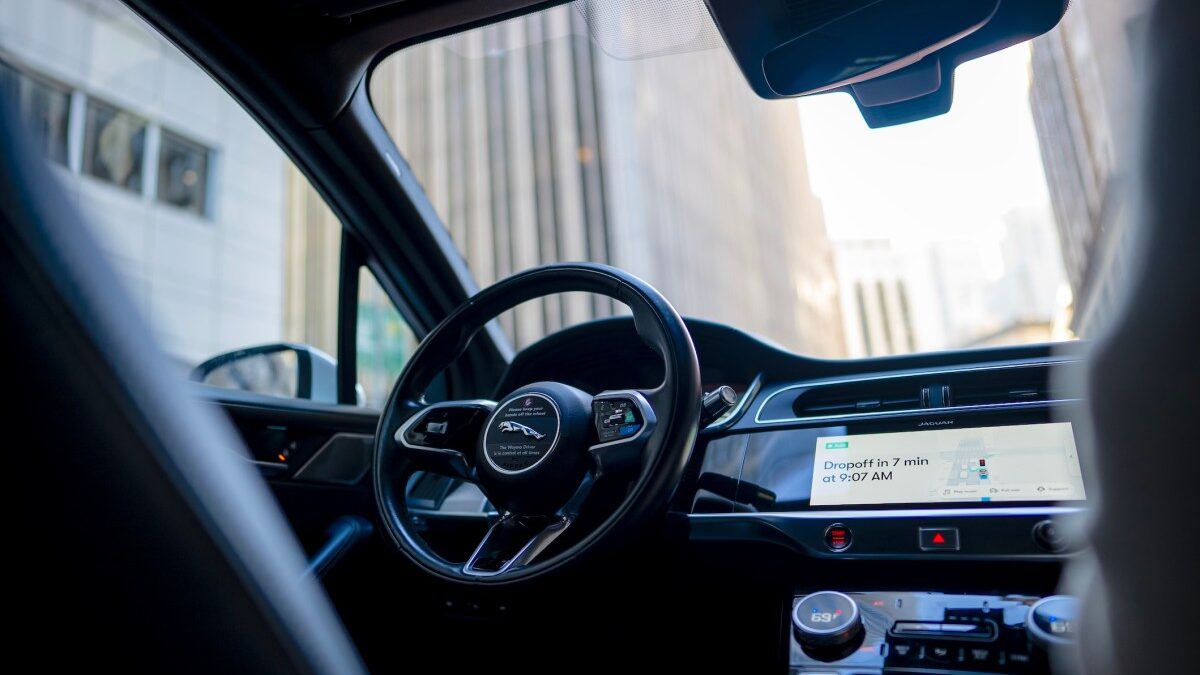
Waymo paused passenger service in Atlanta on Thursday, May 21, then expanded the pause to San Antonio, Dallas, and Houston later in the day. The trigger was a Wednesday-evening incident in Atlanta: an unoccupied Waymo vehicle drove into a flooded street during a period of intense rain, stopped, and stayed stuck for about an hour before the company’s recovery team could pull it out.
The single-vehicle event is small. The four-city pause is the news. Waymo’s weather decision-making is now visibly tied to a federal data feed, and that feed runs behind the storms it’s supposed to warn about.
What happened in Atlanta
TechCrunch’s account puts the incident on Wednesday afternoon, during what the National Weather Service later classified as a flash-flood event over metro Atlanta. The robotaxi was running empty between trips, not carrying a passenger, when it entered the flooded segment. Its standard behavior in unexpected obstacle conditions held: stop, request remote support, wait. The recovery team needed about an hour to physically reach the vehicle and tow it.
Waymo’s statement to TechCrunch: “Safety is Waymo’s top priority, both for our riders and everyone we share the road with. During a period of intense rain yesterday in Atlanta, an unoccupied Waymo vehicle encountered a flooded road and stopped.”
The company also acknowledged the underlying gap. “The flooding occurred before National Weather Service alerts were issued,” it said, in a follow-up TechCrunch published Thursday evening. The cars rely on those alerts to pre-empt weather, slow operations, or pull off the road. When NWS is behind the storm, Waymo is too.
Why the four-city pause matters more than the one incident
A robotaxi getting stuck in a flood is not a fleet-wide problem. The reason Waymo extended the operational pause to three other cities is that all four operate the same software stack, the same weather-handling layer, and the same NWS alert dependency. If the Atlanta vehicle’s behavior was correct given the inputs it had, the same inputs in San Antonio, Dallas, or Houston could produce the same outcome.
This is the trade-off autonomous fleets make when they centralize control. A human-driven Uber fleet doesn’t pause Atlanta when a driver gets stuck; the driver makes a call. A Waymo fleet handles weather centrally, which is safer at scale and harder to localize when something fails. The Atlanta event is the first time that trade-off has shown up publicly as a multi-city service interruption.
Atlanta is also Waymo’s newest market. The city launched ride-hail service earlier this year with Uber as the dispatch partner; the network is still small enough that the pause is a manageable hit. Pausing Houston, where Waymo runs a much larger commercial operation, is the more material business impact.
What’s still unknown
- How long the pause lasts. Waymo hasn’t given a target restart date. Service status pages for the four cities show “limited” or “paused” without a timeline.
- Whether other vehicles flagged the same area. A single car driving into a flood is one data point. If neighboring cars had already routed away from the flooded segment, the question is why this one didn’t.
- What changes operationally. Waymo could integrate radar weather feeds, third-party precipitation data, or municipal flood-sensor networks instead of relying on NWS alerts. The company hasn’t said which path it’s taking.
- Whether Atlanta’s flash flooding was an outlier. NWS alerting latency is a known issue; the storm developed faster than the local office could issue warnings. That’s not unique to Atlanta.
Waymo declined further comment beyond the TechCrunch statement at press time.
What this means for you
If you ride Waymo in any of the four paused cities, expect Uber’s app to fall back to human drivers for the duration; the integration handles the swap automatically. If you’re in a non-paused market, this isn’t your problem yet.
If you build with public-data feeds, the lesson is the more interesting one. Waymo just publicly conceded that a federal alert API is a single point of failure in its weather-handling stack. Anyone running infrastructure that depends on NWS for safety-critical decisions, drone delivery, autonomous trucking, outdoor robotics, should be looking at the same pattern. Today’s pause is a real-world reminder that “official source” doesn’t mean “fast enough for autonomy.”
Share this article